

How Global Events Affect the Forex Market: 7 Major Events and Their Effects
Written by
| Reviewed by Abdul Latheef K
Last updated on
May 21, 2026
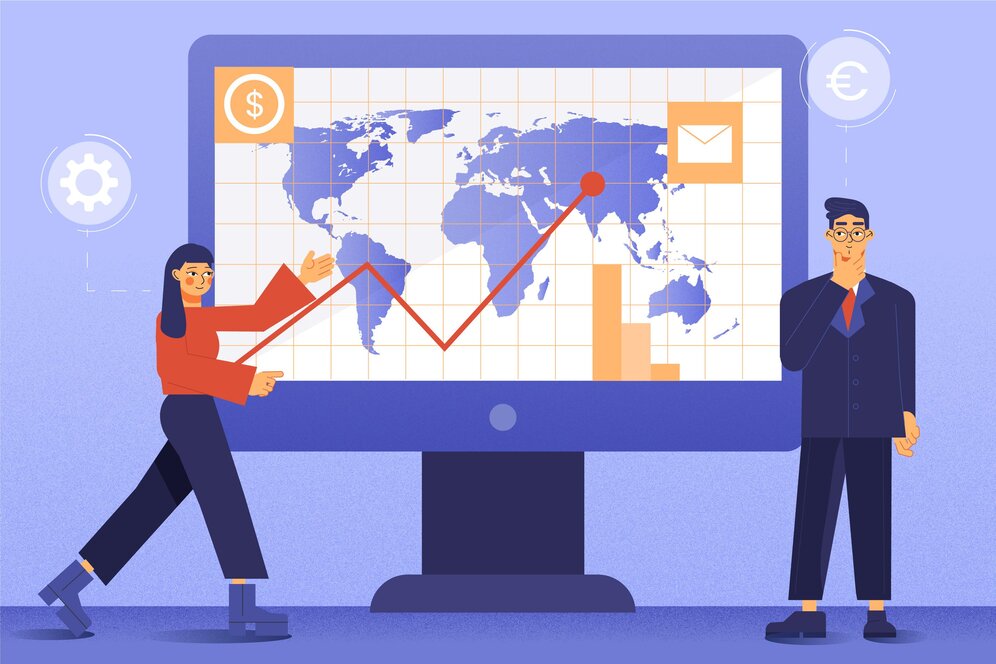
According to the Bank for International Settlements 2025 Triennial Survey, global OTC forex turnover reached about $9.6 trillion per day, making it one of the largest financial markets in the world.
In this volatile environment, understanding how global events affect trading and currency prices is essential, as traders react to various events such as inflation, interest rates, wars, elections, economic data releases, and central banks.
During periods of stress, investors may rotate toward currencies often viewed as defensive, such as the USD, JPY, or CHF, although market reactions vary by the source of the shock and broader liquidity conditions.
In this blog, we will discuss the global events that affect forex, why different currencies behave differently, the currency pairs that are affected by global events, and how traders can cope with such situations.
sec2
Why Global Events Move Currency Prices
Global events create multiple impacts on the forex market. From investors’ attitude, capital movement, and inflation expectations to interest rate expectations and risk attitude, these events influence forex market movements in diverse ways.
Understanding these impacts allows traders to analyse the market reaction rather than simply responding to news headlines.
Sentiment and Risk Appetite
One of the major impacts of global events is the shifting of investor psychology. In the face of uncertain times resulting from wars, economic recessions, political volatility, or financial shocks, investors tend to seek safe havens and avoid risky trades.
In turn, this leads to risk aversion, where currencies like USD, JPY, and CHF tend to appreciate. On the other hand, during stable periods, traders may prefer riskier currencies such as AUD, NZD, and emerging market currencies.
Some scenarios leading to risk-off conditions are:
- Military interventions.
- Economic recessions globally.
- Banking crises.
- Political instability.
- Central banks surprising the markets.
Capital Flow and Foreign Investment
Global events also influence how money flows between nations. Investors may be inclined toward economies with greater growth, stability, and profitability.
If a nation has a solid economic performance or high-interest rates, capital inflows may occur in this nation, causing the currency to strengthen.
Alternatively, poor economic performance or political unrest may lead investors to pull out their money, causing currency depreciation.
That explains why monetary policy decisions, GDP statistics, and election results may lead to significant currency fluctuations.
Inflation Expectations and Interest Rate Outlook
There is a close relationship between interest rates and inflation in forex trading. When inflation levels rise, forex traders anticipate that central banks will raise interest rates to tame rising prices.
An increase in interest rates makes a particular currency more attractive to foreign investors seeking higher yields, while lower interest rates make the currency less attractive to foreign investors.
Forex traders pay close attention to inflation data releases like Consumer Price Index (CPI), Producer Price Index (PPI), wage inflation, and retail sales figures.
Market Volatility and Price Swings
Certain world events cause a sudden shift in the markets. Events such as unforeseen elections, sanctions, wars, and surprise monetary policy from banks cause a significant shift in prices within seconds.
The major currency pairs like the EUR/USD, GBP/USD, and USD/JPY often react quickly due to their high liquidity and volume.
It is at this point that proper risk management comes into play, considering that volatility creates opportunities as well as risks.
sec2
How Global Events Affect Forex Market Movements
Some world events can affect exchange rates almost immediately. While some events cause short-term volatility, others can affect the currency pairs for weeks and even months.
In this section, let us have a detailed discussion on how certain global events affect the forex market.
1. Interest Rate Decisions
Interest rate decisions are among the main drivers of exchange rates.
Forex investors keep a close eye on major central banks like the Federal Reserve, European Central Bank, Bank of England, and Bank of Japan because even the slightest policy shift may lead to strong market repercussions.
Markets often react before the actual decision because traders try to predict whether rates will rise or fall.
For example, when the Federal Reserve aggressively raised interest rates during 2022–2023, the US Dollar strengthened significantly, and pairs like EUR/USD saw strong downside pressure as traders shifted capital toward USD.
2. Inflation Reports
Inflation means an increase in the cost of goods or services, often reducing the purchasing power of money. This is why inflation is closely watched in the forex market, as it affects consumer spending and future interest rate decisions.
The key inflation indicators include the Consumer Price Index (CPI) and the Producer Price Index (PPI).
When the US CPI comes in higher than expected, traders may expect the Federal Reserve to remain hawkish. This often strengthens the US Dollar and can push pairs like EUR/USD lower.
Currency reactions to inflation data depend on whether inflation is above or below expectations and what that implies for future central-bank policy.
While inflation and interest rates drive monetary policy expectations, employment data helps traders understand the overall strength of an economy.
3. Employment Data and Economic Growth
Employment data is vital as it indicates the health of the economy. High employment levels generally help a currency because it often means that consumers are working, spending money, and fuelling the economy.
The following are some employment indicators:
- Non-Farm Payrolls (NFP)
- Unemployment rate
- Wage rate
- Labour-force participation
Poor labour market statistics may negatively affect investor sentiment, which could lead to reduced expectations for interest rates.
US Non-Farm Payrolls is one of the most closely watched forex data releases, particularly when labour-market conditions are central to Fed expectations.
Strong GDP figures may support a currency, while weak GDP figures may weigh on it.
4. Wars, Political Tensions, and Geopolitical Events
Wars, conflicts, political tensions, uprisings, and geopolitical events are some of the major global events that can lead to significant shifts and changes in the forex market.
Recent geopolitical events that have contributed to forex volatility include:
- Brexit
- Russia-Ukraine Conflict
- US-China Trade Dispute
- Middle Eastern Conflicts
Currency pairs commonly affected by political developments include:
- EUR/USD
- USD/JPY
- GBP/USD
- USD/CAD
Geopolitical tensions can affect oil, gold, and currency markets by changing supply expectations and investor risk appetite.
Aiswarya, a full-time trader from India, shared with us that the recent political tensions in the Middle East and a few other countries have affected her trades with unexpected market shifts. However, she also noted that proper fundamental analysis helped her avoid heavy losses.
5. Elections and Government Policy Changes
Elections can influence confidence in an economy due to changes in fiscal policies, government spending, international trade, and other factors.
Traders usually monitor:
- Election outcomes
- Tax policies
- Government expenditures
- International trade
- Fiscal policy
Political uncertainty often tends to have a negative impact on the currency, as investors may not be comfortable dealing with a government with uncertain policies.
For instance, the British Pound during the Brexit negotiations was very volatile as traders did not know the future of international trade.
However, business-friendly policies and political stability can boost investor sentiment.
6. Commodity Prices and Forex
Some currencies are highly correlated with commodities because they rely heavily on the export of those commodities.
The Australian dollar and New Zealand dollar are often described as commodity-linked currencies because Australia and New Zealand are important exporters of resources and agricultural products.
The Canadian Dollar is also closely linked to oil prices because Canada is a major oil exporter.
Increasing oil prices can be beneficial for exporting countries, as it helps increase revenue and improve trade balance conditions. This is the main reason why USD/CAD often reacts strongly to crude oil price changes.
At the same time, commodity prices can negatively impact countries importing large quantities of energy.
It is essential for traders to follow oil, gold, natural gas, agricultural commodities, and OPEC decisions as they might influence inflation and market sentiments.
7. Natural Disasters and Global Health Crises
Natural disasters and global health crises might affect economic performance and lead to forex market volatility.
Quakes, floods, pandemics, and hurricanes may affect manufacturing activities, international business operations, transport infrastructure, and consumer behaviour.
Some examples are:
- COVID-19 pandemic
- Earthquakes in Japan
- Floods in agricultural sectors
The global COVID-19 pandemic led to severe market volatility due to the possibility of a global recession. During such times of uncertainty, investors usually switch their funds to safe-haven currencies like USD, JPY, and CHF.
Central banks may also make an emergency cut on interest rates, engage in quantitative easing, and initiate stimulus packages.
sec2
Which Currency Pairs React Most to Global Events
Not all currency pairs react to geopolitical events in the same way. While some pairs show quick moves, others become more volatile to wars, conflicts, and other global events. Here is a discussion of how major pairs, safe-haven pairs, and emerging pairs react to global events.
Major Currency Pairs
Most of the major currency pairs respond immediately because they are highly liquid and trade at high volumes in the foreign exchange market.
The interest rate, inflation rate, GDP growth, central bank policies, and economic news releases are some factors that affect such currency pairs.
Common major currency pairs include:
- EUR/USD
- GBP/USD
- USD/JPY
- USD/CAD
- AUD/USD
Such currency pairs experience significant volatility during FOMC meetings, CPI reports, NFP data, and geopolitical events.
For instance, the EUR/USD often reacts to policy changes by the Federal Reserve and the European Central Bank.
Safe-Haven Currency Pairs
Certain currencies tend to perform well during periods of uncertainty. They are often referred to as safe-haven currencies.
Popular Safe-Haven currencies include:
- US Dollar (USD)
- Japanese Yen (JPY)
- Swiss Franc (CHF)
Investors tend to buy such currencies during wars, economic recessions, sanctions, or financial crises as a way of mitigating risks. This is one aspect of risk-on/risk-off sentiment in the forex market.
For example, EUR/USD can react to geopolitical shocks, but its medium-term direction is often shaped more by relative growth, inflation, and Fed-ECB policy expectations.
Emerging Market Currencies
Emerging-market currencies are likely to be more volatile due to their sensitivity to capital flows, oil prices, and investor sentiment.
Some of these currencies are:
- Indian Rupee (INR)
- Turkish Lira (TRY)
- South African Rand (ZAR)
They can weaken against other currencies when the US Dollar strengthens, or investors become more risk-averse. A sudden rise in oil prices, concerns about a global recession, or even political unrest can cause significant exchange rate fluctuations.
This is one way global events can affect exchange rates, especially in economies sensitive to trade flows, commodity prices, or external financing.
sec2
How Traders Can Prepare for Global Forex Events
The impact of global events on forex trading is worth mentioning. They can often lead to sudden price swings and unexpected changes. So, traders who prepare in advance may be able to handle the volatility and avoid emotional decisions.
Below are some tips that can help traders prepare for global forex events.
Use an Economic Calendar
An economic calendar is perhaps one of the most useful tools in forex trading. This tool lists the schedule and times of important economic news events affecting exchange rates and currency pairs.
Traders usually pay attention to:
- Interest Rate Decisions.
- Inflation indicators.
- GDP releases.
- Non-farm Payroll Reports (NFP).
- FOMC Meetings.
- Elections.
- Announcements by Central Banks.
An economic calendar can help traders identify periods when volatility may increase, so they can review their exposure and risk controls before major announcements.
Follow Central Bank Speeches
Statements by central bank officials can move forex prices even without an official rate change.
Traders need to closely watch the speeches and press releases by leaders such as the Chair of the Federal Reserve, the European Central Bank President, and the Bank of England Governor.
Traders often watch for hawkish or dovish language in these communications, as they can quickly change investor sentiment.
For example, if the Fed Chair signals that more rate hikes are coming, the US Dollar may strengthen immediately.
Manage Risk During High-Impact Events
It is important to consider risk management, especially during major news events that influence forex market movements.
Traders should consider:
- Using stop-loss orders.
- Decreasing the number of positions.
- Avoiding over-leverage.
- Monitoring widening spreads.
- Avoid the market before major announcements when the situation is unclear.
Many professional traders avoid opening fresh positions just before major news releases like Non-Farm Payrolls (NFP) or FOMC decisions because sudden volatility can trigger stop losses even when the overall trade idea is correct.
Waiting for the initial market reaction to settle often helps traders make more structured decisions.
New traders tend to incur losses by entering positions too soon in volatile periods caused by rapid news events. It is more prudent to wait until the market’s initial reaction settles before executing a trade.
Combine Technical Analysis With News Analysis
Traders should not rely only on the news headlines. Instead, the technical analysis may help confirm whether the current price movement is expected to continue in the same direction.
Technical indicators like support and resistance levels, trend lines, breakout zones, and trading volume can assist in making sound trading decisions.
If an interest rate hike pushes AUD/USD above a key resistance level, the trader may have to wait for a breakout before opening a position.
This is helpful because geopolitical events impact forex trading instantly, while technical analysis can help prevent the trader from making irrational moves.
sec4
Conclusion
The forex market can be easily influenced by world events. Interest and inflation rates, wars, political elections, and any major economic news can influence prices in the foreign exchange market.
Understanding how global events affect the forex market can allow traders to be better prepared for possible market shifts rather than making emotional decisions. Traders who pay attention to world news, who use an economic calendar, and who follow their own trading plans usually cope better with market fluctuations.
No trader can accurately predict every market move. Being informed, disciplined, and risk-aware may help traders make more structured decisions and become profitable traders, but losses remain possible, and profitability is never guaranteed.
If you would like to start forex trading, understanding the impact of the above factors is crucial.
Author Info
Uma Nair is a professional content writer with over 3 years of experience and a strong foundation in crafting engaging and informative content across diverse domains. Over the years, she has dealt with various niches, and her growing interest in finance has led her to explore the world of financial writing. As an English Language and Literature postgraduate, her educational background supports her ability to convey complex topics in easy and accessible content. In her free time, she stays updated on industry trends to continually enhance the value of her content.

Reviewed by
Abdul Latheef K is a Researcher at Jawaharlal Nehru University, New Delhi. He is also an Author, Educator, and Expert in personal finance and Investment. His areas of interest comprise the Stock Market, foreign capital flows, and Open Economy Macroeconomics.
Disclaimer:
The information provided on this blog is for general informational and educational purposes only and is not intended as financial, investment, legal, or tax advice. While we strive to ensure accuracy, completeness, and timeliness, the financial world is dynamic, and content may become outdated or subject to change. Always conduct your own research or consult with a qualified financial advisor before making any investment or financial decisions. The authors and publishers of this blog are not liable for any losses or damages arising from the use or reliance on the information presented.
sticky end
Pages
Plans
Legal
Zyvest Capital Prime Ltd (www.zyvest.com) is licensed and regulated by the Financial Services Commission (FSC) of Mauritius as an Investment Dealer (Full Service Dealer, Excluding Underwriting) under Licence No. GB25204874 | Code: SEC-2.1B, issued on 29 August 2025.
Risk Statement : An investment in derivatives may mean investors may lose an amount even greater than their original investment. Anyone wishing to invest in any of the products mentioned in www.zyvest.com should seek their own financial or professional advice. Trading of securities, forex, stock market, commodities, options and futures may not be suitable for everyone and involves the risk of losing part or all of your money. Trading in the financial markets has large potential rewards, but also large potential risk. You must be aware of the risks and be willing to accept them in order to invest in the markets. Don’t invest and trade with money which you can’t afford to lose. Forex Trading are not allowed in some countries, before investing your money, make sure whether your country is allowing this or not.
You are strongly advised to obtain independent financial, legal and tax advice before proceeding with any currency or spot metals trade. Nothing in this site should be read or construed as constituting advice on the part of Zyvest Capital Ltd. or any of its affiliates, directors, officers or employees.
Contracts for Difference (CFDs) are complex financial instruments and come with a high risk of losing money rapidly due to leverage. A significant percentage of retail investor accounts lose money when trading CFDs with providers. You should consider whether you understand how CFDs work and whether you can afford to take the high risk of losing your money.
CFDs are not suitable for all investors. Ensure you fully understand the risks involved and seek independent advice if necessary. Past performance is not a reliable indicator of future results. Please read our full Risk Disclosure Statement, Terms and Conditions, and Privacy Policy before engaging in any trading activity.
Disclaimer : Zyvest Capital Ltd. does not provide services for citizens/residents of the United States, Cuba, Iraq, Myanmar, North Korea, Sudan. The services of Zyvest Capital Ltd. are not intended for distribution to, or use by, any person in any country or jurisdiction where such distribution or use would be contrary to local law or regulation.