



How to Become a More Disciplined Trader
Written by
| Reviewed by Abdul Latheef K
Last updated on
April 20, 2026
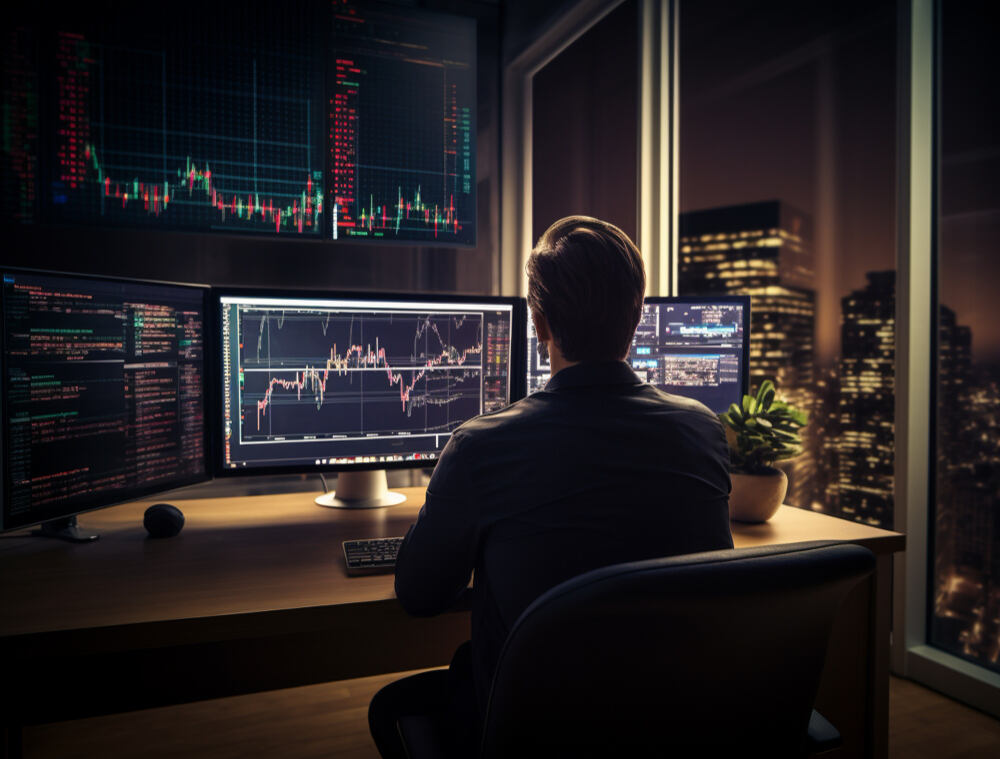
Discipline is one of the foundational stones of long-term success in trading. Without it, even strong strategies or years of experience may be applied inconsistently, which can negatively affect trading performance.
Discipline in trading is not about learning new strategies. To become a more disciplined trader, it is important to take appropriate actions consistently, even when emotions are strong.
Similarly, choosing a suitable trading session, creating rules you can actually follow, regularly tracking trades, and more are also required to become a more disciplined trader.
Are you an overtrader, rule breaker, and consistency struggler? You are not alone. In this guide, you will learn how to become a disciplined trader through structured planning, controlled risk, patience, and habits beyond your charts.
sec2
What Does ‘Discipline’ Mean in Trading
Discipline in trading refers to the ability to follow a given process every time, regardless of how one feels or the market conditions. It is what translates knowledge into results.
Trading in stocks, forex, cryptocurrency, and other markets requires execution, not just knowledge. This is where self-discipline in trading comes in.
While one may be good at their trading strategy, they may still fail due to emotional trading, which results from trading psychology and behavioural finance.
Some of the common reasons why traders may be undisciplined include:
- Loss aversion, where a trader is averse to losing money and thus holds trades for too long in a losing position.
- Overconfidence, where a trader takes too much risk due to overconfidence in their trades.
- Confirmation bias, where a trader tends to ignore information that contradicts their existing view.
- Lack of a structured plan and unrealistic expectations.
For a trader to be disciplined, it is important to understand that discipline is all about structures and actions.
Platforms like MT4 and TradingView enable disciplined execution, but the source of discipline is behaviour. Experts like Mark Douglas and Brett Steenbarger emphasise the importance of habits and repetition in the development of discipline.
So, discipline and strategy are both important. A sound strategy combined with consistent execution is more likely to support long-term trading performance.
sec2
How to Become a More Disciplined Trader
Becoming a disciplined trader is not just about learning several strategies or memorising financial concepts. It is mainly about learning how to execute the rules without fail, regardless of the market changes, emotions, or other factors.
In this section, let us discuss some major habits that can help improve your discipline in trading.
1. Follow a Trading Plan
No plan means no discipline. A plan helps eliminate guesswork and enables you to make decisions based on logic rather than emotion.
Your plan should define entry and exit criteria, stop-loss placement, position sizing, and the amount of capital risked per trade.
Your trading plan should define where you enter the market, where you exit, which stop-loss and take-profit levels you use, and how much risk you take on each trade. It should also include when you’re entering the market and when you’re staying out of the market.
Writing down the rules helps reduce the need to make decisions under pressure. This is necessary because the majority of errors occur in real-time thinking.
Many experienced traders use rule-based trading systems because they can help reduce emotional decision-making and encourage consistency.
2. Reduce the Number of Trades You Take
One of the biggest mistakes in forex trading that affects discipline is over-trading. The more you trade, the more you are prone to trading based on impulse rather than logic.
It is common for traders to feel the need to be constantly trading, especially in markets like forex or cryptocurrency. But being active doesn’t mean you’re being productive. On the contrary, being overly active due to FOMO can lead to making bad decisions, resulting in losing trades.
The best approach is to look for trading setups that align with your plan and meet your predefined criteria. Additionally, before making a trade, pause for a second and ask yourself if you’re really making the right call.
So, one of the best ways to become a disciplined trader is to learn to pass on trading opportunities.
3. Accept That You Cannot Win Every Trade
Losses are a part of trading. Making efforts to avoid them completely may result in bigger blunders.
Many traders are prone to loss aversion. It is a term used in behavioural finance. Loss aversion is a psychological phenomenon in which traders, due to fear of loss, hold onto losing trades for too long a period or close winning trades too soon.
A disciplined trader understands that trading is a game of probabilities. Trading performance should be evaluated over a series of trades rather than based on a single outcome.
4. Control Emotions Before Entering the Market
Discipline starts even before execution. If your mindset is not stable, your decisions will not be either.
Emotions like fear, greed, frustration, and more can have a large influence on your decisions. While fear can lead to hesitation, greed can result in overtrading, and frustration can turn to impulsive decisions. So, controlling them is important.
Before entering a trade, take a moment to reset and review your reasoning. Ask yourself:
- Does this trade stick with my trading plan?
- Am I following my trading checklist?
- Am I making the right decision based on logic or based on emotions?
Having good trading psychology with impulse control can help you avoid emotional trading.
5. Use Fixed Risk Management Rules
Risk management is crucial in forex trading. These rules are a safety system that protects capital as well as your mindset. So, without risk management, discipline cannot be maintained for long.
Establish limits for each trade, determine how much you’re willing to risk per trade, and set your maximum loss for the day or week. This helps you reduce emotional decision-making, especially when you’re in a losing streak.
Furthermore, establish your stop loss and make sure that you have a consistent risk-to-reward ratio. These rules can help limit losses when trades do not go as planned, although losses may still exceed expectations in volatile market conditions.
Over time, this habit may help build confidence and stability, which can support to be more consistent in trading.
6. Track Every Trade You Take
If you’re not tracking your trades, that means you are not improving from your mistakes. Moreover, you might be making the same errors over and over again without knowing it.
Tracking your trades can be effective if you maintain a trading journal. It can help you compare different trades, evaluate the strategies used, and review the outcomes over time. A good journal should include:
- Reasons for entering and leaving trades.
- Varying market conditions.
- Your emotional state.
- Whether you stuck to your plan or not.
Constantly reviewing your trades can help identify patterns and alter your trading plan accordingly. It can also help correct mistakes and build stronger discipline over time.
7. Focus on Process, Not Profit
Focusing only on the profit can cause unnecessary pressure, especially when you face multiple losses. This pressure can often lead to poor and inconsistent decisions.
So, instead of concentrating only on profit, you should change your focus to the process. Remember, your main focus should be on following the process consistently, as this may support better long-term performance. Make money a byproduct of the correct and consistent execution of your plans.
Many professional traders assess both their adherence to a trading process and their long-term performance results. They understand that consistency in a system translates into consistency in results. This is very important if you wish to build discipline in your trading.
8. Build Patience by Waiting for High-Probability Setups
There will be many opportunities in the markets. However, not all of these opportunities are good enough to be taken.
Having discipline means waiting for opportunities that meet your requirements. Many traders lose their discipline when they feel compelled to act all the time. However, good traders spend most of their time waiting for the right trade.
Patience is especially important in swing trading and position trading. Being able to wait for the right time is what differentiates a disciplined trader from an impulsive trader.
Remember that doing nothing can also be a good decision.
9. Accepting Disciplined Trades Can Sometimes Be Boring
One of the biggest misconceptions that people have about trading is that it is always exciting. However, the reality is that trading can be a repetitive and boring activity at times.
There are no constant actions, no emotional highs, and no rush in trading. Instead, there is a set process that you need to go through every day. This repetitive behaviour is what leads to success in the end.
Most people fail in trading simply because they are looking for excitement instead of repetition. However, consistently following a sound process can improve the likelihood of achieving more stable trading results over time.
10. Choose a Suitable Session to Trade
Before you start forex trading, it is important to know both when to trade and when to stay out of the market. Forex is a full-day market, but that does not mean that you have to trade the whole day.
Different sessions in the forex market behave differently. Trading randomly can cause impulsive decisions. A disciplined trader can choose a session that best suits them and stick to it.
For example:
- London session: Often experiences higher trading activity.
- New York session: Mostly showcases high movements because of the overlap.
- Asian session: May be quieter and more range-bound under normal conditions.
This can help traders avoid overtrading and maintain better control over their decisions. It is not just about how you trade, but it is also about when you trade.
11. Create Rules You Can Actually Follow
Complexity can make it difficult to be disciplined in trading. If the rules you set are too complicated, you may not be able to follow them.
Therefore, it is essential to ensure that the rules you set are not complicated, but easy to understand and follow. This can ensure you remain consistent in your trading activity.
So, following a set of rules can help you build strong habits, helping you develop self-discipline in trading.
12. Build Discipline in Life, Not Just in Trading
Your trading behaviour is a direct reflection of your daily routines. If your daily routines lack structure, that behaviour may also appear in your trading decisions.
Your discipline is developed away from the market. Your ability to manage your time, stay focused, and avoid distractions directly impacts your performance.
If you are undisciplined in your daily routines, it is very hard to be disciplined in your trading. Successful traders treat trading like a structured activity, not a random hobby.
So, changing your trading habits alone cannot make you a disciplined trader, but maintaining a routine and good habits in everyday life can.
sec2
Why Traders Break Discipline
Traders who have a good trading strategy still face difficulties in being consistent. So, sometimes it is not the lack of knowledge, but a series of decisions made under pressure.
To improve your self-discipline in trading, you need to recognise these patterns and understand what causes them.
Lack of Clarity
If your trading plan is not well defined, the decision-making can be unclear. Hence, hesitation occurs, leading to emotional decisions.
If the plan is not well defined, the trader might:
- Make decisions based on impulse.
- Exit trades too early or too late.
- Change decisions in the middle of the trade.
This is where clarity helps by providing simple rules and a checklist.
Emotional Pressure
Another significant reason for breaking the rules is the role of emotions. Fears, greed, and frustration are the most common emotional factors.
These emotions can often lead to the following decisions:
- Fear: Exiting trades too early.
- Greed: Taking unnecessary trades.
- Frustration: Triggering revenge trades.
These behaviours can be due to loss aversion and overconfidence biases. Lack of emotional discipline and impulse control makes it difficult to achieve consistency.
Overexposure to the Market
Watching charts all day can be noisy and pressurising. This can often lead to unwanted trades, particularly in forex and day trading.
When a trader is constantly exposed to the markets:
- They can feel compelled to act.
- They might over-analyse price action.
- They may make trades outside their plan.
Unrealistic Expectations
The pressure of making quick profits can lead to a situation where a trader makes trades that don’t match their system.
This may lead to:
- Overtrading
- Not sticking to the trading system
- Not following the risk rules
Planning for the long term and measuring success by how well you follow your rules can help you become consistent in trading.
s
Not Taking Feedback
If trades are not reviewed, errors will be repeated. However, many traders are not aware of this and are making their improvement process slower.
If performance is not tracked, then:
- The same mistakes can be repeated.
- There can be a lack of awareness of weaknesses.
- Improvement may become slower over time.
sec2
Conclusion
To be a more disciplined trader, you must be more focused on behaviour than on outcomes. Discipline is developed by doing small, repetitive things, like sticking to your plan, managing risk, controlling emotions, and being consistent even when you’re not getting the outcomes you expect.
Discipline is also a matter of awareness. By knowing what undermines your discipline, whether it’s acting on impulse, over-exposure to the market, or having unrealistic expectations, you begin to change those things.
So, discipline is not about being perfect. It’s about showing up consistently, doing what you planned, and getting decisions right. That is how traders may improve consistency and work toward better long-term performance.
Author Info
Uma Nair is a professional content writer with over 3 years of experience and a strong foundation in crafting engaging and informative content across diverse domains. Over the years, she has dealt with various niches, and her growing interest in finance has led her to explore the world of financial writing. As an English Language and Literature postgraduate, her educational background supports her ability to convey complex topics in easy and accessible content. In her free time, she stays updated on industry trends to continually enhance the value of her content.

Reviewed by
Abdul Latheef K is a Researcher at Jawaharlal Nehru University, New Delhi. He is also an Author, Educator, and Expert in personal finance and Investment. His areas of interest comprise the Stock Market, foreign capital flows, and Open Economy Macroeconomics.
Disclaimer:
The information provided on this blog is for general informational and educational purposes only and is not intended as financial, investment, legal, or tax advice. While we strive to ensure accuracy, completeness, and timeliness, the financial world is dynamic, and content may become outdated or subject to change. Always conduct your own research or consult with a qualified financial advisor before making any investment or financial decisions. The authors and publishers of this blog are not liable for any losses or damages arising from the use or reliance on the information presented.
sticky end
Recent Posts

Share this post
Pages
Plans
Legal
Zyvest Capital Prime Ltd (www.zyvest.com) is licensed and regulated by the Financial Services Commission (FSC) of Mauritius as an Investment Dealer (Full Service Dealer, Excluding Underwriting) under Licence No. GB25204874 | Code: SEC-2.1B, issued on 29 August 2025.
Risk Statement : An investment in derivatives may mean investors may lose an amount even greater than their original investment. Anyone wishing to invest in any of the products mentioned in www.zyvest.com should seek their own financial or professional advice. Trading of securities, forex, stock market, commodities, options and futures may not be suitable for everyone and involves the risk of losing part or all of your money. Trading in the financial markets has large potential rewards, but also large potential risk. You must be aware of the risks and be willing to accept them in order to invest in the markets. Don’t invest and trade with money which you can’t afford to lose. Forex Trading are not allowed in some countries, before investing your money, make sure whether your country is allowing this or not.
You are strongly advised to obtain independent financial, legal and tax advice before proceeding with any currency or spot metals trade. Nothing in this site should be read or construed as constituting advice on the part of Zyvest Capital Ltd. or any of its affiliates, directors, officers or employees.
Contracts for Difference (CFDs) are complex financial instruments and come with a high risk of losing money rapidly due to leverage. A significant percentage of retail investor accounts lose money when trading CFDs with providers. You should consider whether you understand how CFDs work and whether you can afford to take the high risk of losing your money.
CFDs are not suitable for all investors. Ensure you fully understand the risks involved and seek independent advice if necessary. Past performance is not a reliable indicator of future results. Please read our full Risk Disclosure Statement, Terms and Conditions, and Privacy Policy before engaging in any trading activity.
Disclaimer : Zyvest Capital Ltd. does not provide services for citizens/residents of the United States, Cuba, Iraq, Myanmar, North Korea, Sudan. The services of Zyvest Capital Ltd. are not intended for distribution to, or use by, any person in any country or jurisdiction where such distribution or use would be contrary to local law or regulation.